Showing posts with label jersey. Show all posts

03 July 2017

The Independent Jersey Care Inquiry - Statement from Campaigners


PRESS RELEASE ON BEHALF OF:
CAMPAIGNERS FOR AN INDEPENDENT INQUIRY INTO JERSEY CHILD ABUSE

“An end to the Jersey Way.

A group of current and former politicians, as well as Jersey bloggers who campaigned for almost a decade on subject of Child Abuse, and who fought for the Independent Abuse Inquiry to take place have said they are awaiting with ‘great anticipation’ the publishing of tomorrow’s report into child abuse. 
Speaking on behalf of the campaigners, Deputy Montfort Tadier said, “This was a hard fought battle and the Inquiry would not have happened were it not for a handful of committed individuals in the States Assembly, careleavers and members of citizens’ media, who successfully campaigned for the Inquiry to take place.
First and foremost, we must recognise that systemic child abuse was allowed to take place in state institutions, and elsewhere, over recent decades, to some of the most vulnerable children in our society. For some survivors and those close to them, there may never be true justice or closure, but today we can stand with them in solidarity and recognise their pain and trauma.
The two important questions that we hope the Inquiry will address are: How was this able to happen in Jersey, and could it still happen today?n
During the giving of evidence, many witnesses spoke of ‘the Jersey Way’; by this they meant a culture in which reporting abuse was difficult, where they weren’t listened to, where whilstleblowing was almost impossible, where the island’s reputation came before the safeguarding of the vulnerable and where complacency was the norm. 
There are still examples of some of these failures today: some areas of public sector and institutions remain hostile to criticism. Where this culture exists, it must be replaced by an active pursuit of honesty, openness, and accountability. Where problems exist, staff, agencies and citizens must feel able to raise valid concerns knowing that effective action will be taken in a timely manner. This will, no doubt, also mean better resourcing and investment in areas such as social care, education and training. We must also be prepared to reform our institutions where they are no longer fit for purpose and tradition can no longer be an excuse for not adopting modern best practice.”
-ENDS-
NOTE- Due to the timing of the publication of the report, the Campaign Group will be making a public statement on Tuesday at 1pm , in the Blampied Room, States Bulimg, Royal Square. Members of the media may attend and ask questions. 
Contact –Deputy Montfort Tadier, 07797844358
Twitter: @DeputyTadier

27 October 2015

Is Jersey a One Party State with its own Radio?

Political debate is common elsewhere, even in Legoland
So just where is the political debate? We are often told that 'choice' is what distinguishes democracies from dictatorships, but what happens when those in power refuse to engage in political debate with those in opposition?

Again, as is usually the case for the representatives of the de facto Jersey Tory Party, when asked by the BBC to join Reform Jersey in the studio for debate, they refuse. To make matters worse, the presenters of the local BBC seemed to take personal offense, this morning,  when I challenged the Ministers on their continued absence and their lack of mandate, to the point that the usually cheery and polite anchor chose to keep his head down and ignore me rather than engage in the customary civilities.

On top of that, there was an attempt to frame the debate as an 'abstract argument' which had already been dealt with in the States this month, rather than an ongoing reality, which was only now starting to afflict suffering on real people, in the real world.
BBC Jersey's Ashley Tracey and Tim Pryor

The BBC in Jersey must really up their game and shame politicians who consistently refuse to engage other than on their terms. They should offer truly insightful, incisive and interesting political discourse, rather than trite, lazy apologetics.

It is the job of any [indepedndent] media to act, as a check and balance on Government, as a Fourth Estate. In Jersey, they may as well be on the States payroll.

But the Government themselves must also interact.

I or Reform Jersey do not claim to have all the answers, but we can't always be wrong! Let's have meaningful debate and let people decide for themselves what to think.

29 September 2015

In Politics, Talk is Cheap


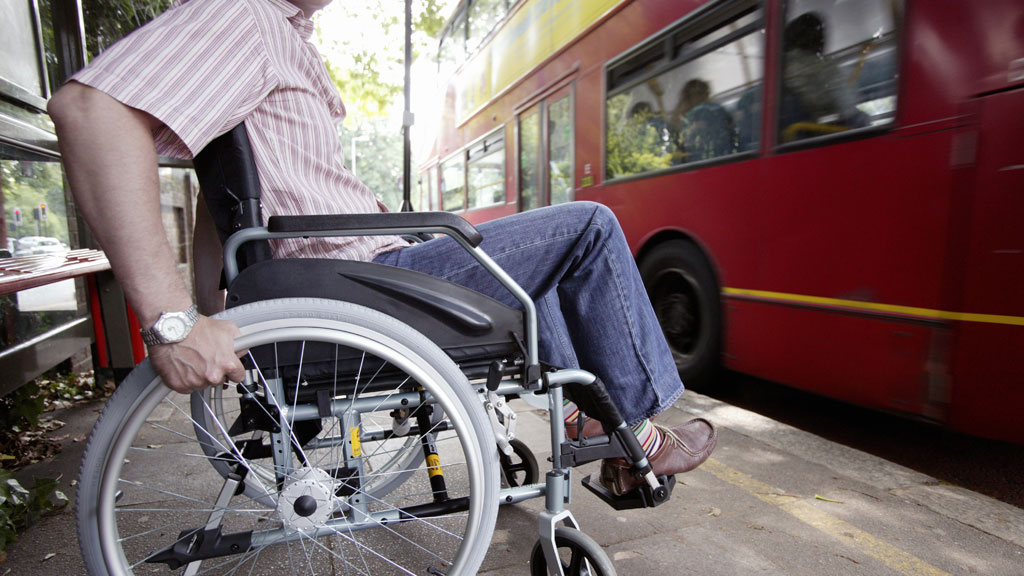
These [disabled] people need to have access to public transport which is free.Deputy E.J. Noel of St. Lawrence, seeking election as Minister for Transport and Technical Services, 6th November 2014. 


Today, I lodged an amendment to the Medium Term Financial Plan asking for the £100, 000 that was to be allocated by the Privileges and Procedures Committee to States Members Pensions to be put to the (arguably better) cause of providing free bus passes for disabled residents in Jersey. As I explain below, this sum may or may not be enough, however, it will be a start and, more importantly, it will force a States decision on the matter and keep the pressure up on the Minister to deliver on his election promise.


Anthony Lewis receives national award presented by Australian
rugby player, Michael Lynagh on behalf of the Stroke Association
The issue of free access for disabled people to public transport came up at the very first senatorial hustings at Grouville in 2014 when well known Jersey man, Anthony Lewis, whose courage following a stroke was an inspiration to all, asked 'I have not been able to get a disabled bus pass; do we do enough for disabled people in Jersey?'  The responses were interesting;  What is particularly striking  is just how many established and long-serving politicians - including the Treasury Minister and a Former Social Minister - were unaware of the fact that disabled people in Jersey do not and did not (then) have free concessionary passes. Strange that.

-------

Responses from successful candidates:
Senator Ozouf: "I didn’t know you couldn’t get a bus pass. Many of us would want to fix that. More money is going into healthcare spending."


Dr. Cameron: "We can do a lot more. I have concerns over the way the Impairment Benefit is assessed, it’s not fit for purpose. The Jersey Disability Partnership is there and we do need to listen more to people like you to inform our policy in future."


Senator Routier: "No we’re not doing enough. I am the Chair of the Service Users’ Forum and wasn’t aware of this issue of not having a bus pass. We’re having a Transport Policy Review which I’m sure will put that in there."


Senator Farnham: "I’m embarrassed to learn you couldn’t get a bus pass, you should be able to; something has to be done about that. A lot more could be done, keep campaigning and I’m sure you’ll continue to get results."


Senator Bailhache: "I never thought about the question of bus passes. I’m sure we should be thinking about it. I’m sure there is more to be done, the question has certainly stimulated me and I’m sure others I think about the question for the future." (A great answer which can be given to almost any question)

Senator Maclean: "The question is why you should have had to come to a Hustings to raise this issue, you shouldn’t have had to, we should’ve known about it and been able to deal with issues to do with disabled people, if we can’t help as a government people who are in genuine need, what are we here for, if something needs to be dealt with? I might add that the system of support is sometimes too rigid, people feel almost criminalised at times with genuine needs who need genuine help and other people are abusing the system, so that needs balancing out to ensure we don’t waste money."


Deputy Green: "No we don’t do enough, not focussed on what disabled people can do we concentrate on what they can’t do… nor do we look after the carers. There’s a lot more work to be done."


Senator Gorst:

"Should we put more money into disability? The answer is yes… so we are going to need to put more money in certain areas. We are not doing enough for the disabled. Senator Routier and I have allocated some of our budget now to start a mapping process of disability. We do not know what all the conditions are, how many people there are, therefore we can’t even properly plan all the services that we need or make the changes to the buildings. So we’re starting that work and it’s got to be done in conjunction with business as well; it’s about public awareness… and what businesses are going to need to do as well to look after the people who are working for them, because it’s about ability. We’re not doing enough but we are absolutely committed to doing more… and once we’ve done the mapping and research we’re going to have to spend a lot more money, is that the right thing? I believe it is."


-------------


Clearly, there is a lot of support in the Council of Ministers for this issue. The same sentiment and commitment to action were conveyed only a few weeks later when in Deputy Noel was making his pitch to the States Assembly for the job of Minister for Transport and Technical Services –
"I was appalled when I heard that at the Grouville hustings and I have had another. Yes, that is going to be high on my priorities… We will find a solution and implement that in short order."
Deputy E.J. Noel


With this in mind, the Council of Ministers, and the Assembly, should welcome the amendment which I lodged today, reallocate a starting sum of £100,000 to be used for the purposes of the Minister delivering on this election promise. I shall be very disappointed not to receive unanimous support for this, although such disappointments are not uncommon.

It should be noted that the wideness or narrowness of any proposed scheme (i.e. how many people are likely to be eligible) will have an effect on the overall cost of the scheme. It will also depend on what level of subsidy/discount, if any, the current bus operator will give, but it should be noted that Liberty Bus’s own website confirms that CT Plus is committed to Social Enterprise (presumably a modern phrase for Social Corporate Responsibility). It may well be that part of that Social Enterprise can be to offer free bus passes for the disabled, or at the very least, offer a discounted fair, with the rest being funded by Government.

People in Jersey may disagree on how much money we should spend on Income Support, who should qualify for free TV licenses, and how money should be spent generally. It seems to me, however, that in a decent, civilized society, decent provision should be made for those need assistance to do other things that many of us take for granted. It is important too, as the Health Minister Andrew Green has said, that we focus on what people can do and not what they can't, and this initiative recognizes the courage and resilience that many in our society show in the face of (sometimes hidden) physical and mental adversity.

The people I have spoken to overwhelmingly support the idea that disabled people should be given free travel on public transport (i.e. buses). I hope the States will endorse this amendment and send a strong message of solidarity to these people who play an active role in our society despite the challenges they may face. 


15 September 2015

Les Quennevais - Time to move the Parish Hall?


Today, the public consultation on the possible sites of a new Les Quennevais School has begun. As a former pupil, someone who grew up in the area and, of course, in my capacity long-standing political representative for the area, I am keen to make sure we get this right. 

I believe a new school is long overdue.Teachers, parents and pupils must be commended for their continuing efforts in the pursuit of excellence and the current school achieves excellent results, but it is despite the inadequate 1960s building, which is no longer fit for modern needs, and vastly undersized. 

A balance will need to be struck to mitigate any loss of green fields, and I believe the way to do that is to avoid high density housing on the current site, which will no doubt be the preferred option, given the current housing shortage. 

I am calling for serious consideration to be given to moving the Parish Hall to that site, right in the heart of the Community, where the vast majority of people live - not tucked away in the village of St Aubin, far from most residents, with its parking issues. 

I believe to win around public opinion from the area, people will want to know, quite rightly, what will happen with the current site and that thought has been given to a decent community space, yes, with some quality housing (preferably affordable, sheltered and social), but moreover, open green spaces, allotments and shared community facilities. 

If Education, Planning and Ministers can aspire to this, then there is no reason the new plans cannot be a win-win for everyone.

15 June 2015

Quango Unchained: The Death of Democracy


Tomorrow, I will bring my projet, p.44/2105, to the States Assembly. It should be considered a very moderate proposition asking two things: that the Treasury Minister instruct SoJDC not to proceed with any buildign work, or further binding agreements, until the Corporate Scruinty Panel have finished their review, and presented their findings to the States. This should be done in approx 6 weeks, if they are given the information they need.
Secondly, it asks the Council of Ministers to subsequently bring the plans back to the States for approval. This request is more likely to succeed that asking for a referendum, which I had done previously.
Below, is a short video provided courtesy of Voiceforchildren. I thank him for kindly facilitating this posting, which is really a follow up to my earlier interview on 5th June.

I hope it is helpful. Please take a chance to watch, share and leave a message.

24 April 2015

Jersey's Political System Explained


This week, the Jersey Youth Parliament was launched, with 4 political Parties. The event, held at JCG was very encouraging and a breath of fresh air, from the usual backwards, stale Jersey personality based politics. The parties (seen below) can best be described as a right-wing, centre-right - although the Rose Party might best describe themselves as centrist (akin to the Liberals), a Green Party and a Left of Centre Alliance.


The Youth Parlianement, although only just starting, has managed two things that the 'real' Jersey Assembly has not: 1) It has parties, with meaningful manifestos, differing values and thought out policies. 2) It has a fair voting system - Proportional Representation. If a party gets 30% of the vote, they get 30% of the seats.

The Adult Parliament, however, battles on with its gerrymandered system designed to keep the far-right in power. As such, we at Reform Jersey have prepared a very simply diagram for distribution in schools and to give to newcomers to the island, so they may better understand our Assembly- which also has 4 basic groupings (above). We hope that you will share this with your friends in order that they might better get to know the 4 parties/group and what they stand for.

The four Parties of the Youth Parliament


22 April 2015

Reduce Social Security Contributions and Watch the Money Pour In

 
The typical cost of seeing a GP in Jersey is around £38 per visit
In his letter of 9 April to Jersey Evening Post, Mr John Davis of St Ouen presents a very prejudiced and, ultimately, untrue picture in relation to our Party and its policies.
He starts of by presenting a statement of opinion, his opinion, as if it were a categorical fact: 'It is a truth universally acknowledged that a left-wing politician not in possession of power will 'bribe' the electorate with unfunded spending proposals.' The first question to ask is 'Is it a truth, let alone a universally acknowledged truth?' The second question to ask is: 'why only a left-wing politician?' Why not a right-wing politician, a centrist politician, a green or a nationalist? The answer is, because (1) Mr Davis clearly does not like the politics of the left, or what he perceives to be the politics of the left and he is simply having a go.
 

Mr Davis needs to be corrected on several counts: Firstly, the idea that people's ability to see a doctor/nurse should be based on their need rather than their ability to pay is not the monopoly of left-wing thinkers or politicians; true, the NHS was conceived of by a Labour government after the second world war, but it is interesting to note that all the parties in the UK election are promising extra funding for it, as they recognise its inherent worth.

During the last election, it was the right of centre candidates who were promising all sorts from 50meter swimming pools to free disabled bus passes. We're these costed? And where are these policies now?

Secondly, the policy that everyone - rich or poor - should have free-at-the-point-of-access - is not an attempt to gain popularity; it is something that we and are members resolutely believe in. In a wealthy island such as Jersey, it is unacceptable that every year people are dying prematurely from curable illnesses because they could not afford to see, or were put off seeing a doctor, due to the high cost.


Thirdly, the idea that this kind of policy would 'sacrifice the economy' is simply scaremongering and false. Late diagnoses are very expensive to treat, compared with ones that are picked up earlier, not to mention the additional suffering for the individual and their family and friends. In such cases, the taxpayer picks up the bill. Conversely, a workforce which is able to see the doctor from time to time, as and when it is needed, will be a healthier and more productive one, ultimately benefiting the economy and community.

He talks of means-testing, but apart from the very poorest and sickest, means testing does not exist.  The multi-millionaire pays the same rate as the single working mum and receives the same subsidy, meanwhile the higher earner pays a lower rate of Social Security above the £47,016 threshold. Means testing is often bureaucratic, costly and a blunt tool. We say, better to have universal benefits - including the State Pension.

But Mr Davis is right in one respect. The public should demand costed policies of all their politicians before they are elected. These should feature in manifestos in the run up to elections, however, they can only work if like-minded candidate work together on common policies, thus forming parties, to give the public real choice. Currently, this does not happen. And this is why in States Assembly after Assembly ends up sleep-walking from one election to the next, never tackling the underlying issues of Health, Housing, Education and Environment - because policy is made up on the hoof after the election, and the public never get to cast a verdict on the finer detail.


Reform Jersey is the only official political party in Jersey. We want Jersey to be a fairer, better palce in which to live and work and as such, we aim to improve the life of working people & fight for the
 interests of the most vulnerable in society.


However, Reform Jersey, prior to the election, did make sure it got the figures it required from the outgoing Social Security Minister so it could start to make costed policies and free up new, fairer, funding streams to fund much needed public service improvements. In September 2014 we asked the Minister to provide projections for income yield if social security contributions were set at 4%, 5% and 6%, respectively, with no Standard Earnings Limit  or Upper Earnings Limit, with employer contributions remaining unchanged? (Currently, a lower employee contribution of 2% is paid between the SEL of £47,016 per year and the UEL of £155,568 per year, with nothing paid above this 'ceiling'.).

The answer showed that, based on 2012 figures, it would be possible to introduce a flat rate of social security contribution at 5% (thus reducing contributions for the vast majority of workers, who currently pay 6%) whilst still increasing the contributions yield by £7.5 million. This, clearly, would be a win/win as it would allow more people (the vast majority) to reduce their contributions, thus putting more money in their pockets (a good right-wing principle - 'because they can spend their own money better than government can'), potentially stimulating the economy, as more people will have more disposable income. Yes, it would mean that the highest earners would start paying the same rate as everyone else and I am quite comfortable with that.

Given that in 2013, the total subsidy given over to GP visits was £8.8m, this additional sum would go a long way to reaching the goal achieving free or near-free GP visits for all.

However, we realise that social security contributions are limited in their scope as they do not capture unearned income. If Jersey is to have a truly more progressive system to fund improved an improved Health Service, we must start looking at making the tax system more progressive, so that those who have the ability to pay more do pay more. We will be looking carefully at the latest figures that have been recently released by the tax office (following an Freedom of Information Request) with a breakdown of earners in different bands.

So Mr Davis can rest assured, that populist or not, our policies will be both costed and based on the greater social good. We only wish the same could be said for the policies of other parties, when the next elections come around.


13 April 2015

'Moderniser' to stand for Jurat

Tim Kearsey (41) today announced his nomination for the position of Jurat
Jersey Cricketer, Tim Kearsey, has been nominated for the role of Jurat. The 41 year old,  who was born in Bristol, has been resident in Jersey for 22 years.


He graduated from Oxford Brookes University with a degree in Estate Management , then went on to gain a diploma in International Trust Management at Central Law Training, in Birmingham. He is currently studying part-time for an MBA with Exeter University, with a view to becoming a University Lecturer in the island.


His work background is in the finance Industry having worked for UBS, Barclays and Smith & Williamson.   

Mr Kearsey has served island sport for 20 years as a cricketer and hockey player, coaching and developing young persons for the majority of that time. 

He has recently returned from a trip to Uganda with the Charity Cricket without Boundaries, where he was part of a team training teachers and coaching children in basic cricket skills, as well as spreading the word on AIDS/HIV prevention.

'Service to the community is an integral part of what makes Jersey such a special place. Alongside my professional career development, I have always tried to give back to the community that has offered me such a good home. I have always been interested in the roles that Jurats play: it extends past simply work in the Royal Court, to the administration of elections as well as the Prison Board of Visitors. As such, Jurats are busy people, and the time they give is not always appreciated or understood by the wider community.'

But Mr Kearsey also said there was a need for the role of Jurat and the Courts to evolve if it were to stay relevant to the modern, cosmopolitan place that the island had become.

'There is a perception - not completely unjustified - that Jurats come from a very narrow demographic: they tend to be older/retired and from a certain background. This is understandable, as the demands of the job requires one to have a certain amount of free time. I am unusual in that I am only 41, but I am fortunate to be in a position to have the time, energy and wherewithal to offer myself for the job.'

'Many of the island's institutions are in need of urgent reform; we can no longer simply put Jersey's various anomalies down to a 'quaint' way of doing things. The roles of the Bailiff and - I would suggest - the Attorney General should be separated with immediate effect. We have had two reports by eminent panels - Clothier and Carswell - telling us quite clearly what needs to be done. 

We also need, I believe, an Independent Crown Prosecution, a Department for Justice, an Independent Prison Monitoring Board, which will allow lay members to serve on it, as well as a new appointments panel for all judicial appointments. This will not necessarily endear me to some of the more conservative elements of the Jersey Establishment, but change is already underway, and if elected, I would want to swim with the tide of change, not against it.'

'In providing justice to the island, I would give a high level of understanding to the importance of safeguarding and protecting young people.  Also, the importance of ensuring the island becomes a leading jurisdiction in ensuring organisations have frameworks to ensure that vulnerable and young people are protected.  This also requires recognition of rehabilitation and tougher sentencing on perpetrators of abuse within the community against all persons.  In all areas of law I would endorse empathic understanding and rehabilitation through the penal system and mental health system, which requires further support and resourcing.'


Mr Kearsey takes time out to relax with his friends in Uganda
after a hard week of Cricket coaching

07 March 2015

Let the Independent Jersey Child Abuse Inquiry do its Job

 
Islanders are invited to the Royal Square tomorrow morning (Sunday) at 11am to mark the 7th Anniversary of the Time4Change rally which was held on 8th March 2008 to remember the victims and survivors of Jersey child abuse, past and present.
 
Much has happened since that date, and with the help of campaigners, bloggers and former States Members, we were able to secure a Committee of Inquiry to look independently into these serious matters; to shine a light into one of the darkest chapters in Jersey’s recent history, and to seek to bring redress, justice and healing.
This brief memorial will allow the focus to be put back where it belongs. On the victims and survivors of abuse and there will be a minute's silence as a sign of respect.
 
Recent Events:
I am very concerned at recent developments to sabotage the Committee of Inquiry, made by some elements that have never wanted the Inquiry to happen – individuals who themselves have questions to answer under the Committee’s Terms of Reference.
 
‘The Committee is just about to look at some of its key terms of reference, including [No 13. to] Establish the process by which files were submitted by the States of Jersey Police to the prosecuting authorities for consideration, and establish –
Whether those responsible for deciding on which cases to prosecute took a professional approach;
Whether the process was free from political or other interference at any level.'
 
It is to be expected that some people may not want this to happen and will try anything to obstruct the Committee from being able to do its job.
 
But, for my part, I will resolutely oppose any suggestion that the Committee not be allowed to do its job.
Anyone wishing to attend is invite to bring a daffodil as a sign of respect.

06 December 2014

Unfair Dismissal

As Jersey's new Social Security Minister proposes extending the 'qualifying period' for unfair dismissal from 6 months to a year, the questions surrounding workers' rights on the one hand and burdens placed on employers on the other once again come into question.

I have written a letter (below) to the Minister raising my concerns. But before we go onto that, I think it is necessary to briefly ask: what is the common ground and what is the problem, if any, that we are trying to solve?

Unfair dismissal is not something that we should be encouraging.

I hope the above statement is something that any fair minded person can sign up to.

However, it would seem that the decision of the Minister flies in the face of this self-evident truth. If the Minister's proposal is implemented unchallenged and unamended, unfair dismissal will become more common, as the employer will have 12 months to dismiss unfairly, not six.

The Ministers rationale for the move is to 'encourage employers to take on more staff' and ' remove one of the perceived barriers to employing staff'.

So my questions remain: is this the best way to do this? What is the common ground? What are we trying to acheive?

Well, let's start with the law: Article 61 of the Employment (Jersey) Law 2003 states:

'An employee shall have the right not to be unfairly dismissed by his or her employer.'

So, this is pretty clear. However, currently, you cannot challenge a dismissal you feel to be unfair until you have been employed for 6 months (with some exceptions - see below). This 'right' is therefore being futher restricted if we extend the qualification period to a year.

To put the other side of the argument, it is my understanding that some employers think that (1) the process which one has to go through to dismiss an employee who is (a) either not performing well enough or (b) not suited to the job is too onerous;  warnings need to be given, and due process observed, etc.

(2) There is also the perception that on occasion vexatious claims can be made against the employer and that the agreived party has 'nothing to lose' by making a complaint. It would be interesting to get the stats and more information on this, but it seems to me that if this is a genuine concern, there would be other ways to address this issue than by extending the qualification period. It is a blunt tool which does not differentiate between legitimate claimants and vexatious ones.

It seems to me, if a more acceptable definition of what constitutes 'unfair dismissal' could be agree and an acceptable way of ensuring fair safeguards and process for both parties, then unfair dismissal could be effectively prohibited from day one. I am certain that no reasonable employer wants to act in an unfair way.


Social Security Minister, Deputy Susie Pinel


So without further ado, here is my open letter to the Social Security Minister:

 -------------

Dear Minister,


I was concerned to learn via the press release yesterday that the ability for an employer to dismiss someone unfairly, without challenge from the employee, is to be made easier. And that this significant and controversial  decision should be made solely by Ministerial decision and not the Assembly as a whole.

 
There remain sound reasons why such a decision – with the potential for both intended and unintended consequences – should be subject to scrutiny of the wider membership as well as, potentially, official scrutiny from the relevant panel.


Some points for consideration are as follows:
 
-          The second, third and fourth elements of the discrimination law have not yet been brought forward, so whilst it will still be possible for a dismissal on the grounds of racial discrimination to be challenged as unfair (and illegal), there will be no such possibility for a woman who is dismissed after 11 months because she becomes pregnant. Employers will still be able to be sacked on the basis of their gender, age, disability or sexual orientation – now for up to a year.

-          As such, comparisons with the Northern Ireland and the UK (which has had discrimination legislation for 4 decades) does not tell the whole story.

-          Your statement says that you are ‘confident that a one year qualifying period will encourage employers to take on more staff.’ However, there is no real evidence has been provided to suggest that this will be the case.

-          Similarly, your press release talks about removing one of the ‘perceived’ barriers to employing staff, without scrutinising whether that perception is a valid one.
 
The reality of your proposals is that it will make it easier to dismiss an employee, without due process, for up to a year on grounds which any fair-minded individual might term ‘unfair’.

This will not affect good employers, but it will make life easier for less professional employers to tout best practice, without any recourse from the worker.

As such, I would ask you:

1)      to consider extending the criteria for which a case may be taken to the Employment tribunal from day one (without a qualifying period) to include other appropriate provisions (including those listed above).

2)      to bring this proposal to the States, with a full report and proposition, for the consideration of the Assembly as a whole. 
 

Kind regards,

 
Montfort

 
Deputy M. Tadier

 --------------------
Press Release from the Minister - 5 December 2014
 

Embargoed until 00.01 hours on 5 December 2014
5 December 2014


Minister changes rules for unfair dismissal claims


The Minister for Social Security has decided to extend the qualifying period for unfair dismissal complaints from six months to one year.

Currently, an employee who feels that they have been unfairly dismissed may make a complaint to the Employment and Discrimination Tribunal if they have 6 months’ service with their employer. The Minister has decided that, from 1 January next year, employees must have one year’s service before they are entitled to make a complaint.
The change will only apply to new jobs that start on or after 1 January 2015. Employees who already have a job will retain the right to claim unfair dismissal after 6 months’ continuous service.
Minister for Social Security, Deputy Susie Pinel, said "I am confident that a one year qualifying period will encourage employers to take on more staff and will make a real difference to locally-based small businesses. The additional six months to assess whether a person is right for the job should increase the number of employers who are willing to give a local jobseeker a chance through one of our Back to Work initiatives. I also believe that this change has the potential to motivate employers to offer more permanent terms and conditions of employment to employees, rather than entering into casual staffing arrangements."
The change has been endorsed by the Council of Ministers. The Chief Minister, Senator Ian Gorst commented, "During the elections, I pledged to support local businesses and I have made it clear that one of my priorities as Chief Minister is to promote growth and create employment opportunities. By extending the qualifying period for unfair dismissal claims - to a period that is in line with our competitor jurisdictions - we are sending a positive signal to businesses and removing one of the perceived barriers to employing staff. We need to boost growth, and to do that we need to get more people into work. This amendment will help us achieve that priority."


-ends-

Notes to Editors


1. The qualifying periods for protection against unfair dismissal in other jurisdictions are;

 One year in the Isle of Man
 One year in Guernsey
 One year in Northern Ireland
 Two years in the UK
2. Employees will continue to be entitled to take an unfair dismissal complaint to the Tribunal from day one of employment in certain circumstances. There is no requirement for an employee to have a qualifying period of service in any the following circumstances;
 dismissal for asserting a statutory right
 dismissal for being or proposing to become a member of a trade union
 dismissal for representing or proposing to represent an employee in a disciplinary or grievance hearing
 selection for redundancy on grounds related to union membership or activity, and
 where the reason for dismissal is a prohibited act of race discrimination.
.

06 October 2014

Vote: Ah but Yes!

I am pleased to post a guest posting from the 'Ah but yes, eh!' campaign.

Warning: contains parody. Do not get upset, it is just a bit of fun!

All characters quoted in this post are fictitious. Any resemblance to real persons, living or dead, is purely coincidental.

Vote Ah But Yes, eh!


For Uncontested Elections, Self-Interest, Ossification and the continuation of the Old-boys network.


Efficiency

The loss of the Constables will weaken the ability of the Council of Ministers to force through legislation that harms lower and middle income earners. Without their guaranteed 10 or 12 votes for the Council of Minister, Jersey may turn Communist overnight.

Because the parishes control services locally, Jersey has been able to get away without providing new-fangled ideas, such as kerbside recycling, because it is not viable for 12 parishes to run separate schemes. If things like this were taken out of the hands of the parishes, then we would end up being ruled by ‘hippies’, who know the value of everything, but the cost of nothing!

If the Constables are removed from the States, people will expect the parishes to be run more competently. There is a risk that Constables will no longer be able to blame the demands of their States work for their failings in the parish, and their incompetence will be exposed. This must not be allowed to happen, as it could cause embarrassment.

Community

Through their political role, the Constables can wheel and deal behind the scenes. The loss of the Constables in the States will undoubtedly lead to a significant weakening of the old boys network – as has been the case in Guernsey for many years.

Constables have been identified as the future for ‘e-Government’, indeed, one Constable has already switched from analogue cigarettes to electronic cigarettes. Constables of the island ignite! Or not, as the case may be.

Through the Parish Assembly, and being available at the Parish Hall (well, of course not all of the time, because they are also full time States Members), the Constable is uniquely placed to be able to understand the 18 parishioners (if lucky) that turn up to these meetings. These concerns are then ignored, and the Constables vote the way they are told by the Treasury Minister, who will not fund parish schemes unless they votes as he says.  As such, the Constables are able to ‘filter out’ the noise of the parishioners who are not experts anyway, and make more sensible decisions.

Accountability

The Constables are continually accountable though the ballot box. It is simply not true to say that they are undemocratic, because all Parishes have, at least once in the last 500 years, all had contested elections. Indeed, St Ouen has even had two in the space of only 110 years.

Deputies do not represent the Parishes in the States.
They represent ‘humans’ who live in the Parishes. The Constables, on the other hand, represent the concept of the Parish – how on earth would the bunny rabbits and the trees and the stones be represented were it not for the Constables being in the States? Because of their ancient and arcane role, the Constables are able to communicate with animals and commune with the spirit of inanimate objects in the parish and make sure that their view on matters such as GST and human maternity leave can be taken into account.

The removal of the Constables has the potential to de-stabilise Jersey’s Government. The Finance Industry requires a right wing government. The removal of Constables, in favour of Humans who are elected specifically  to do the job, would almost certainly lead to a doomsday scenario where all the Banks would leave and move to Sark. This must not be allowed to happen.

There is a suggestion that Constables have a “block vote”. We acknowledge this, and so as a compromise, we have consulted with the Constables. They have agreed that only one of them will attend each States sitting, and cast 12 votes. This will free the others to do more work in their parishes, thus strengthening the parishes, but making sure that the States still make the right decisions, every time.

Reform

Constables have proven they are reforming States Members. They were so adamant that they should stay in the States, that they voted to weaken the Parish system by removing their own policing powers, which Constable Rondel described as ‘a nail in the coffin for the honorary system.’ Such self-sacrifice proves they are progressive.

The retention of the Constables is compliant with the Venus Commission, which makes allowances for feudal jurisdictions to do what they want.

Testimonials

Chief Minister Senator Jan Gorse:

“I am supporting the Vote for YES Campaign because I need the votes of  ConnĂ©tables in the States to be Chief Minister again.’

Businessman Kevan Bean:

“So long as I am making money, I couldn’t care less about democracy”.